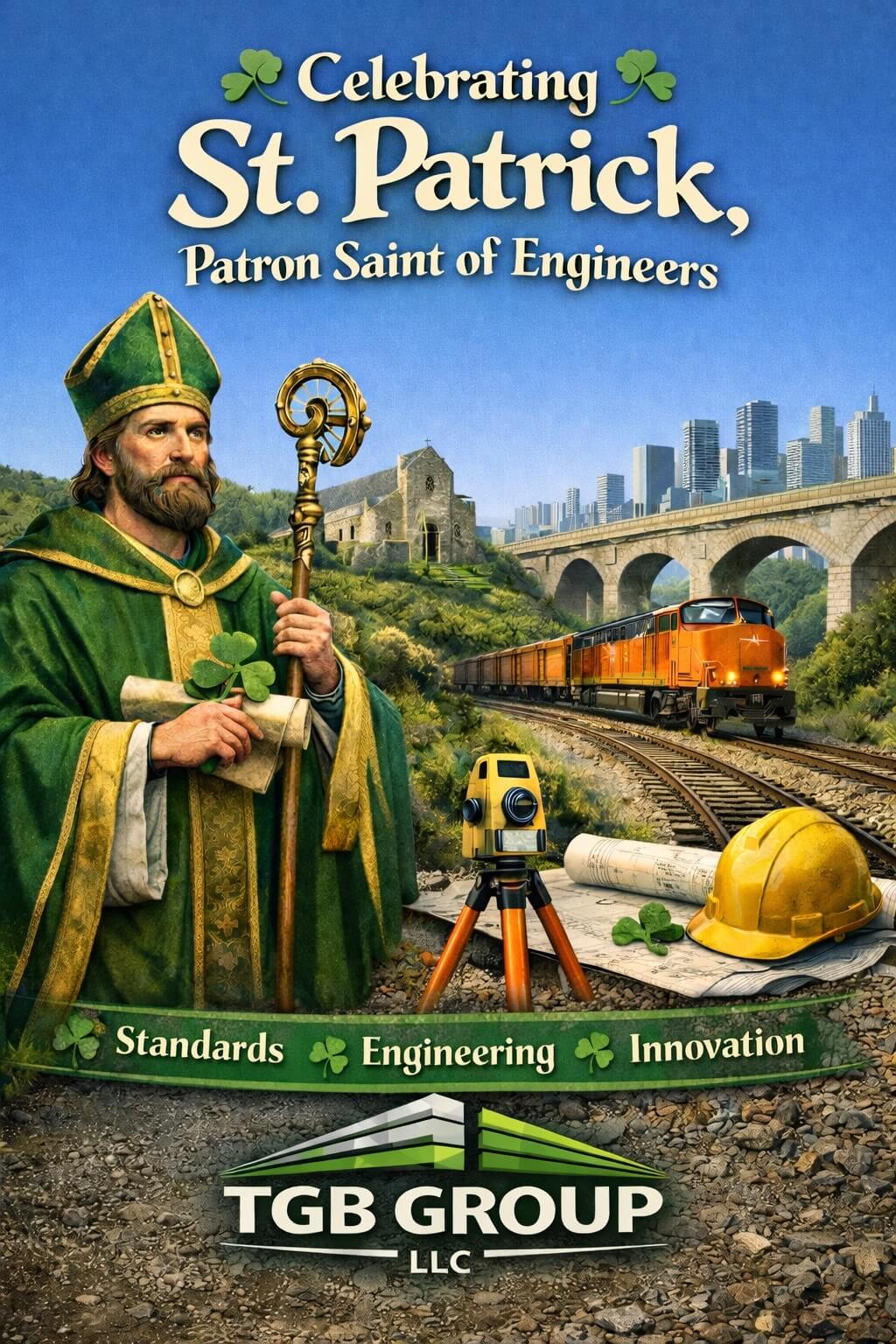
March 17 is widely celebrated as St. Patrick’s Day, often marked by wearing green and enjoying Irish traditions.
What many people don’t realize is that St. Patrick is also recognized in engineering circles as the patron saint
of engineers.
St. Patrick was a 5th-century Romano-British missionary and bishop who played a central role in shaping early
Ireland. Beyond his religious influence, he is associated with the construction and development of churches,
monasteries, and infrastructure – work that required the practical engineering knowledge of the time.
According to long-standing academic tradition, engineering students at the University of Missouri formally
recognized St. Patrick as the patron saint of engineers in 1903. Since then, he has been honored annually during
Engineering Week, and the association has continued through organizations such as Engineers Ireland.
St. Patrick’s connection to engineering is rooted in early Irish construction methods attributed to his era,
including the use of lime mortar and stone arches instead of dry masonry. These techniques represented
meaningful advances in durability and structural design and contributed to the evolution of Irish architecture.
While St. Patrick is best known for his role in Ireland’s religious history, his legacy also reflects the practical
problem-solving, innovation, and building skills that define engineering—making him a fitting symbolic patron
for the profession.
Whether you’re celebrating as an engineer, an admirer of Irish history, or simply enjoying the spirit of the day,
St. Patrick’s Day is a reminder of how standards, tradition, innovation, and skill shape lasting work.